There are cars, and then there are statements. The Chevrolet Impala has always been both. Since the moment it rolled off the line in 1958 — a low, wide, glittering monument to American ambition — the Impala stopped being just transportation and started being a mirror of whoever was behind the wheel. It was a family car and a street machine, a canvas for custom culture and a soundtrack for entire genres of music. No other nameplate in American automotive history has meant so many different things to so many different people for so long.
That's not an accident. The Impala was engineered at just the right moment in American life, in just the right form: big, democratic, achingly beautiful, and affordable enough that a working man could own one with pride. What followed over the next six decades is one of the most fascinating cultural journeys any machine has ever taken.
1958: Born with a Chrome Smile
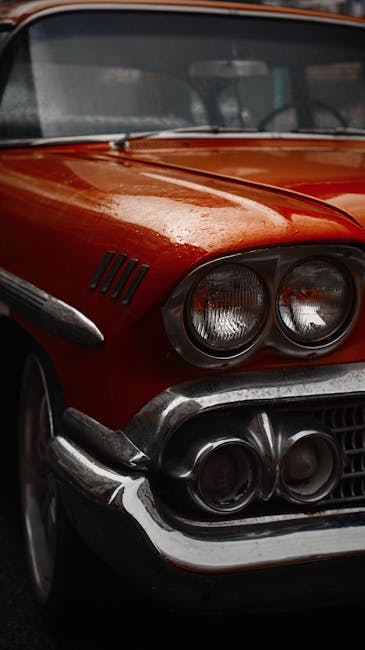
The Impala first appeared as a 1956 Motorama show car, draped in two-tone turquoise and ivory that stopped crowds cold at the New York Coliseum. By 1958, Chevrolet was ready to build it. The production Impala arrived as the top trim of the Bel Air series: longer rear deck, triple taillights on each side, and an interior that matched anything Lincoln or Cadillac was selling at twice the price.
It sat just 55 inches tall — impossibly low for the era. It wore four headlights at a time when eleven states still had laws against them. The standard engine was a 235 cubic-inch six, but the serious buyers ordered the 348 cubic-inch W-series V8, the first in a long line of Impala powerplants that would define American performance. Chevrolet sold 55,989 Impalas in that first year. They were just getting started.
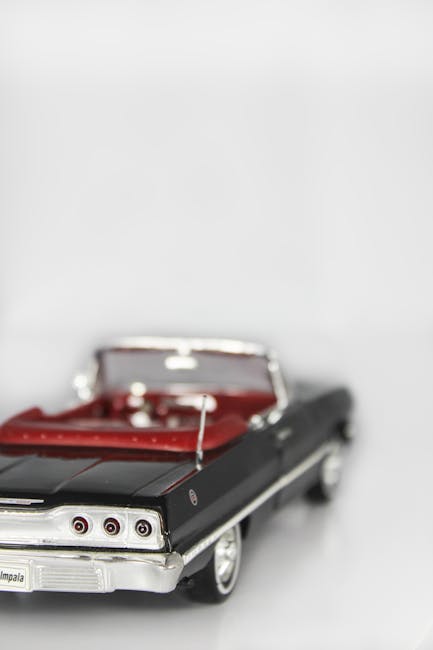
The 1960s: Best-Seller, Big Blocks, and the American Dream
If the late '50s were the Impala's adolescence, the 1960s were its dominance. By 1961 it was a standalone model, no longer living in the Bel Air's shadow. The public responded with spending. Sales climbed every single year, culminating in a number that is almost impossible to process with modern eyes: in 1965, Chevrolet sold 1,074,925 Impalas. Over one million units of a single model, in a single year. It was the best-selling car in America, by a margin that made the competition look like it was parked.
What drove those sales? Price, prestige, and an extraordinary range of configurations — hardtop, convertible, sport sedan, two-door coupe. But the heart of the brand, the thing that made gearheads lose sleep, was the SS.
The Super Sport: 409 and 427
The Super Sport option debuted in 1961 — initially just a dress package with bucket seats, a center console, and crossed-flag emblems. But by 1962, Chevrolet dropped the legendary 409 cubic-inch V8 under the hood, and the Impala SS became a genuine American muscle car. The Beach Boys took notice. Their 1962 hit "409" wasn't named for a cleaning product — it was a love song to the engine, celebrating the zero-to-sixty fury of a full-size Chevy breathing through dual four-barrel carbs. That kind of cultural recognition money cannot buy.
"She's real fine, my 409 — giddy up, giddy up, 409."
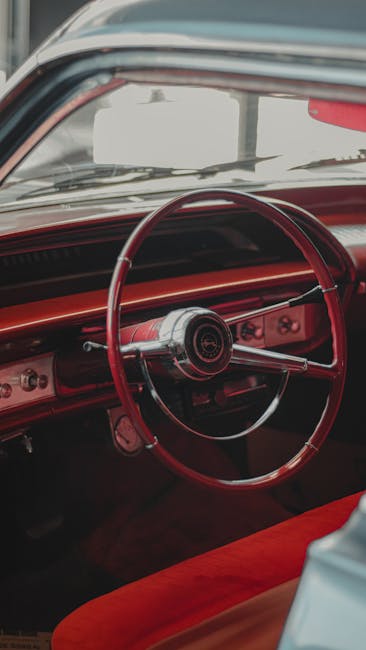
The Beach Boys, 1962 — paying tribute to the Impala SS engineThe 409 gave way in 1966 to something even more ferocious: the 427 cubic-inch Mark IV big block, producing up to 425 horsepower in its top tune. An Impala SS 427 was not a car for the timid. It was a quarter-mile weapon disguised as a family sedan, capable of running high-13-second passes while still carrying four adults in genuine comfort. The combination of size, style, and sheer brutal performance gave the Impala SS a reputation it has never relinquished.
The '64: The Lowrider's Bible Verse
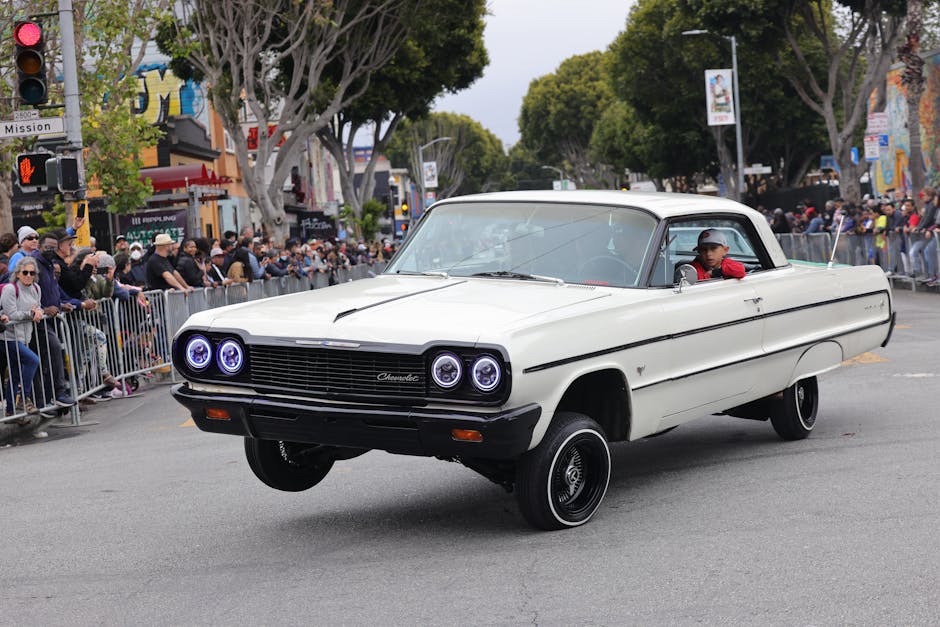
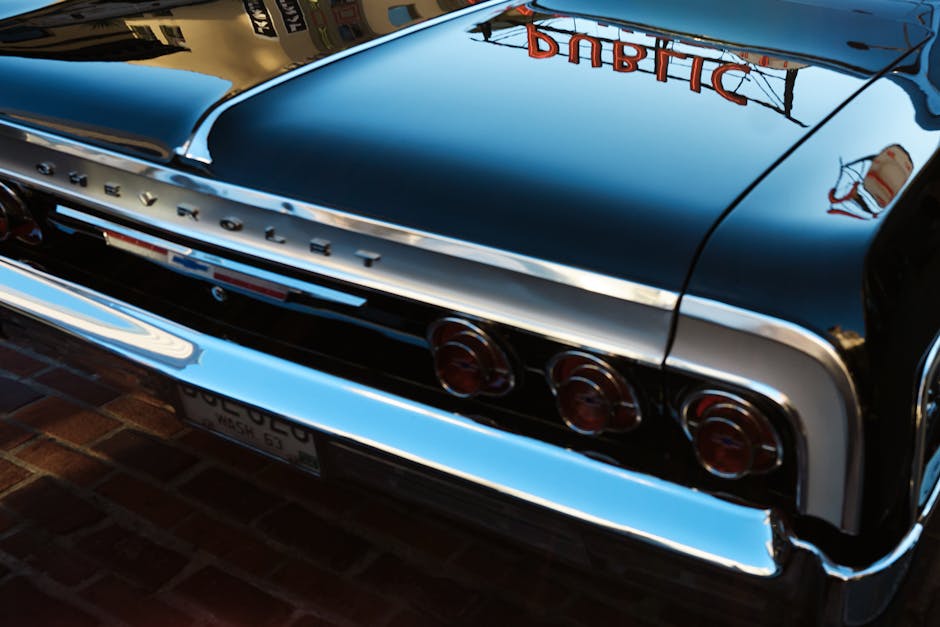
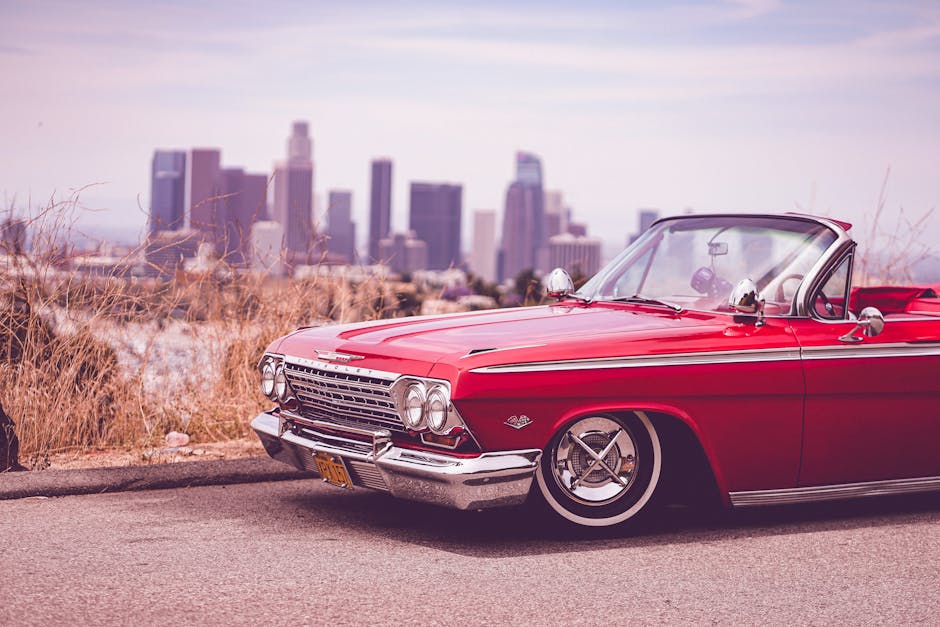
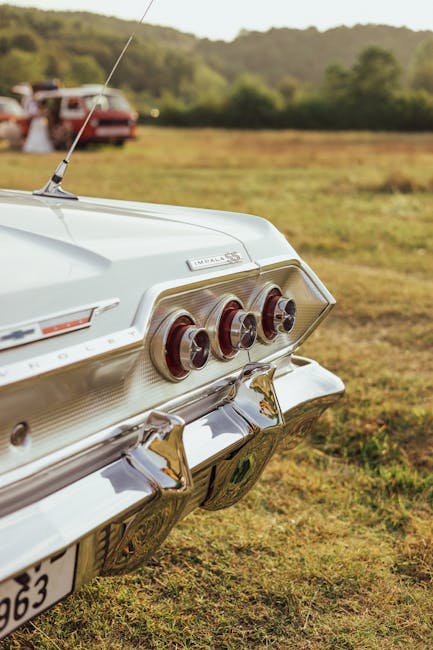
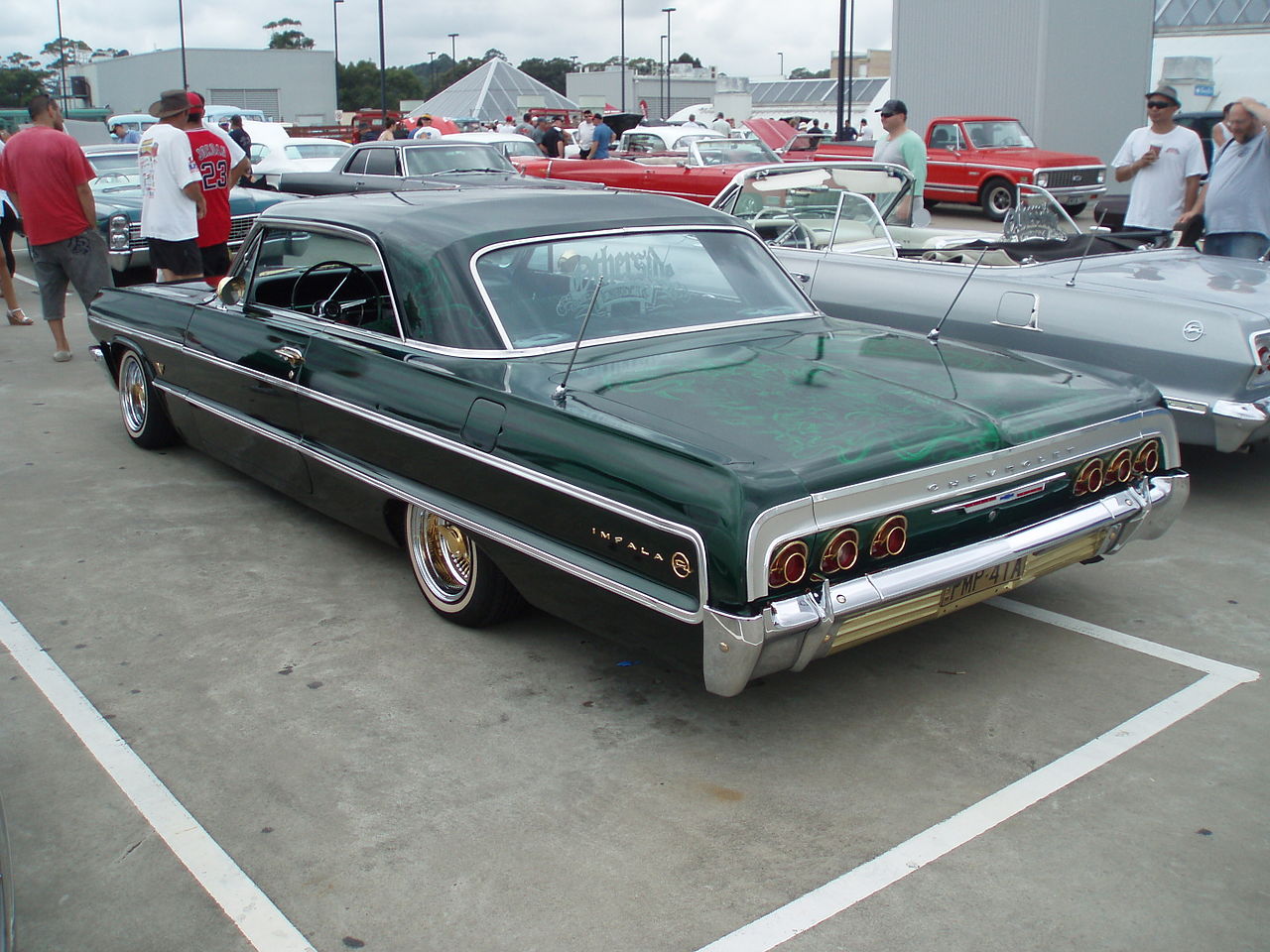
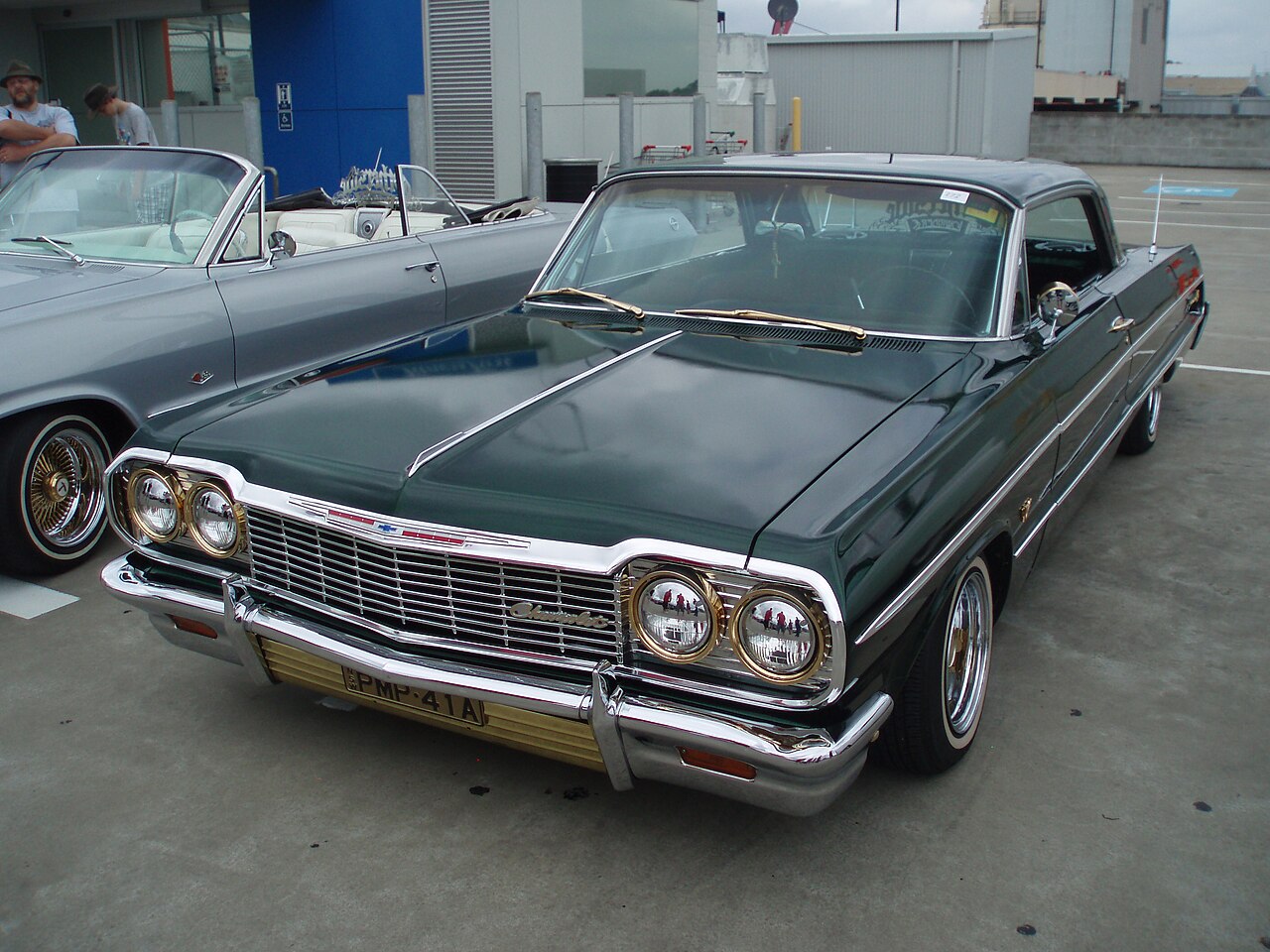
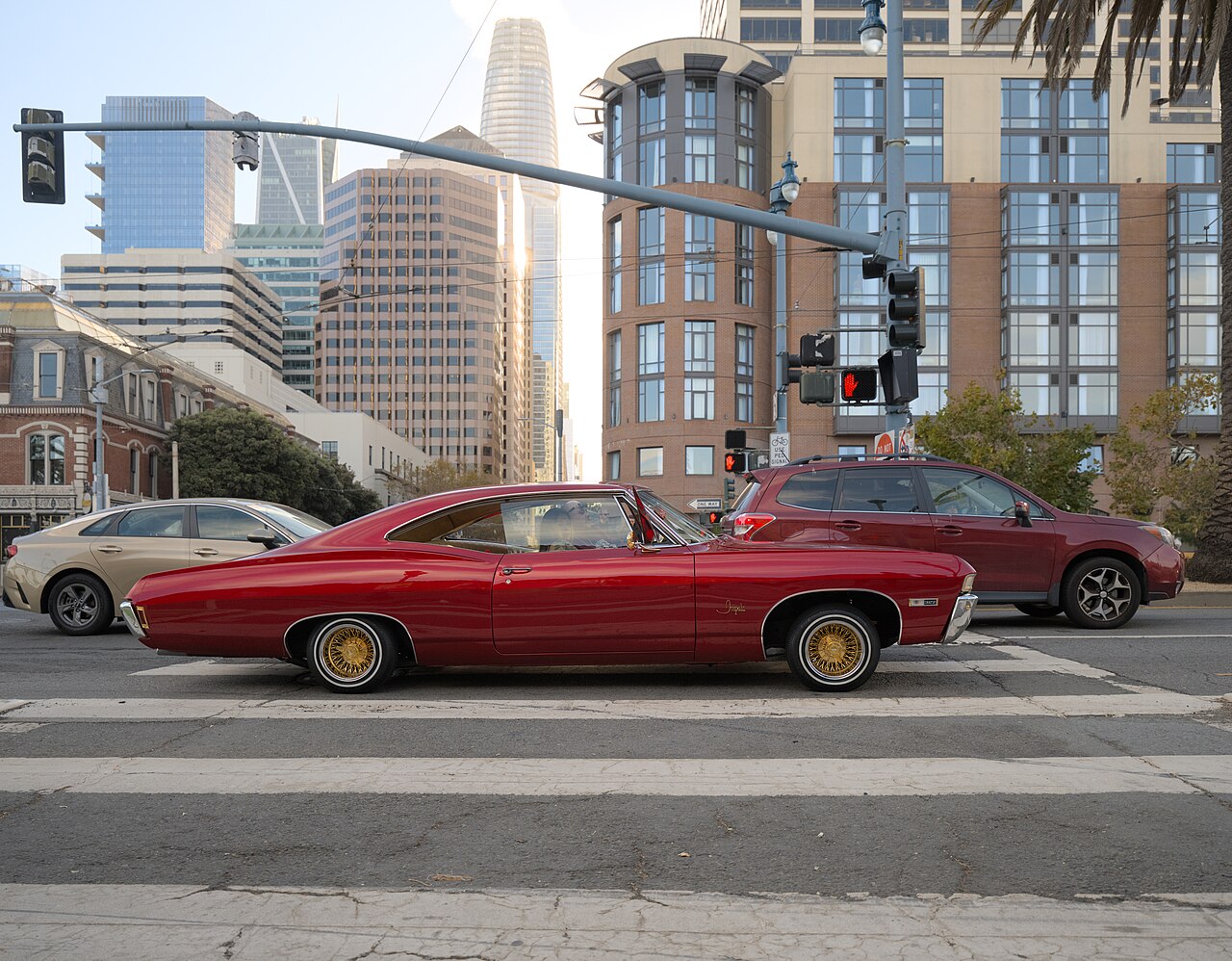
Ask anyone in the lowrider community which year matters most, and the answer comes back without hesitation: 1964. The 1964 Chevrolet Impala is not merely a car in that world — it is scripture. Its proportions are considered perfect. The body lines, the chrome trim, the stance, the way it sits: all of it aligned in a way that responds to customization like no other platform before or since.
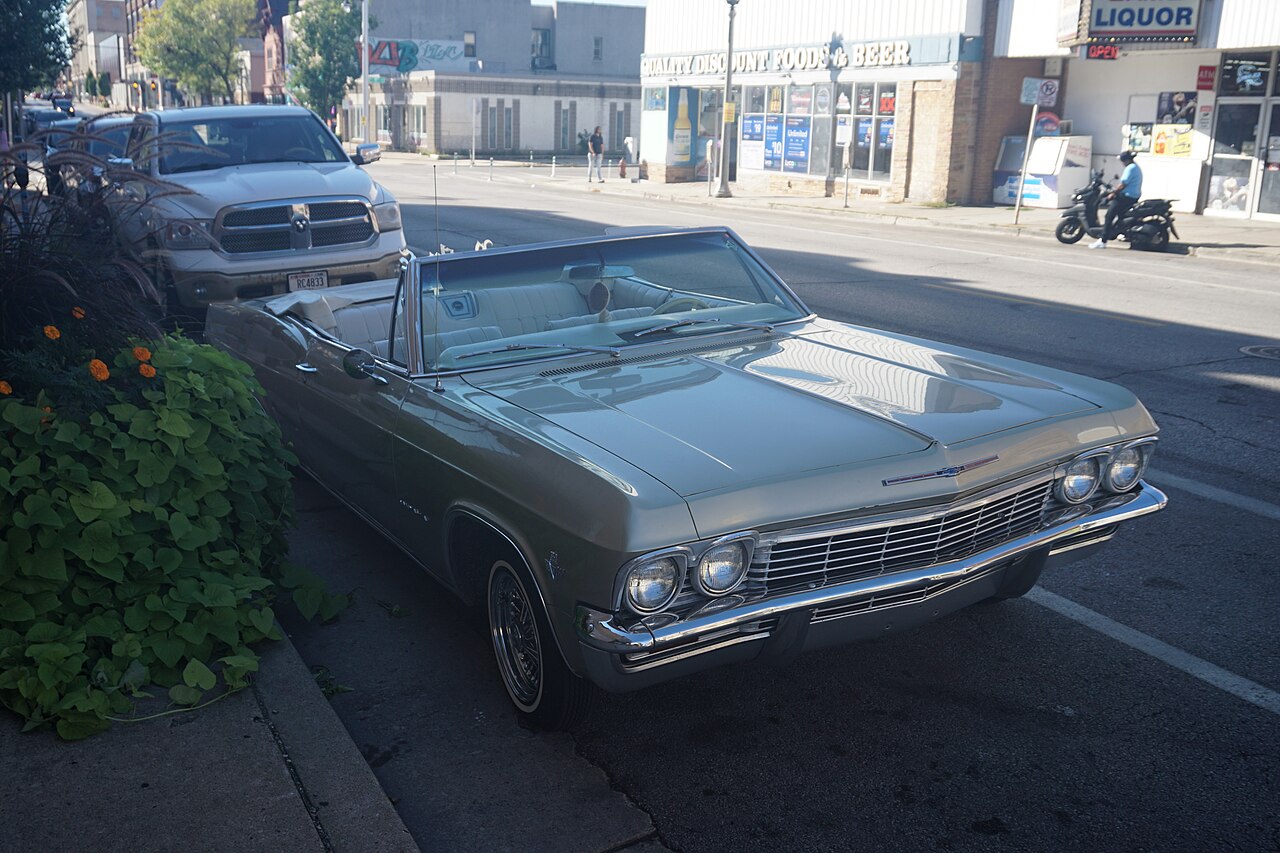
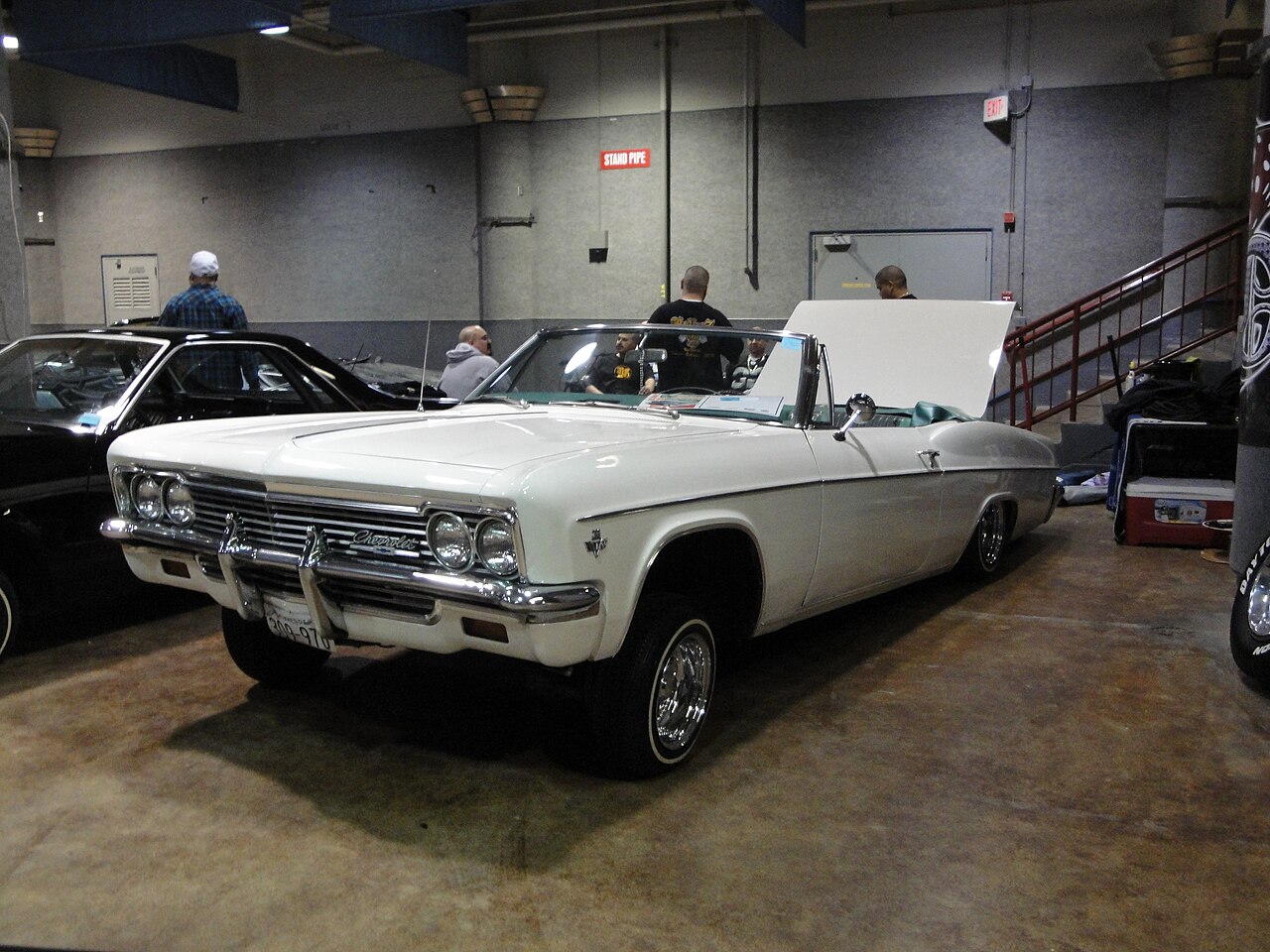
The lowrider culture that developed in East Los Angeles and the Southwest throughout the '60s and '70s found its ultimate expression in the '64 Impala. These cars were lowered on their frames — sometimes to within an inch of the pavement — using hydraulic systems salvaged from WWII-era aircraft. Custom paint: layers of candy-apple and pearl and metal flake in patterns that took months to complete. Rolled and pleated interiors. Wire wheels. Every surface a canvas, every car a statement of identity, pride, and artistry.
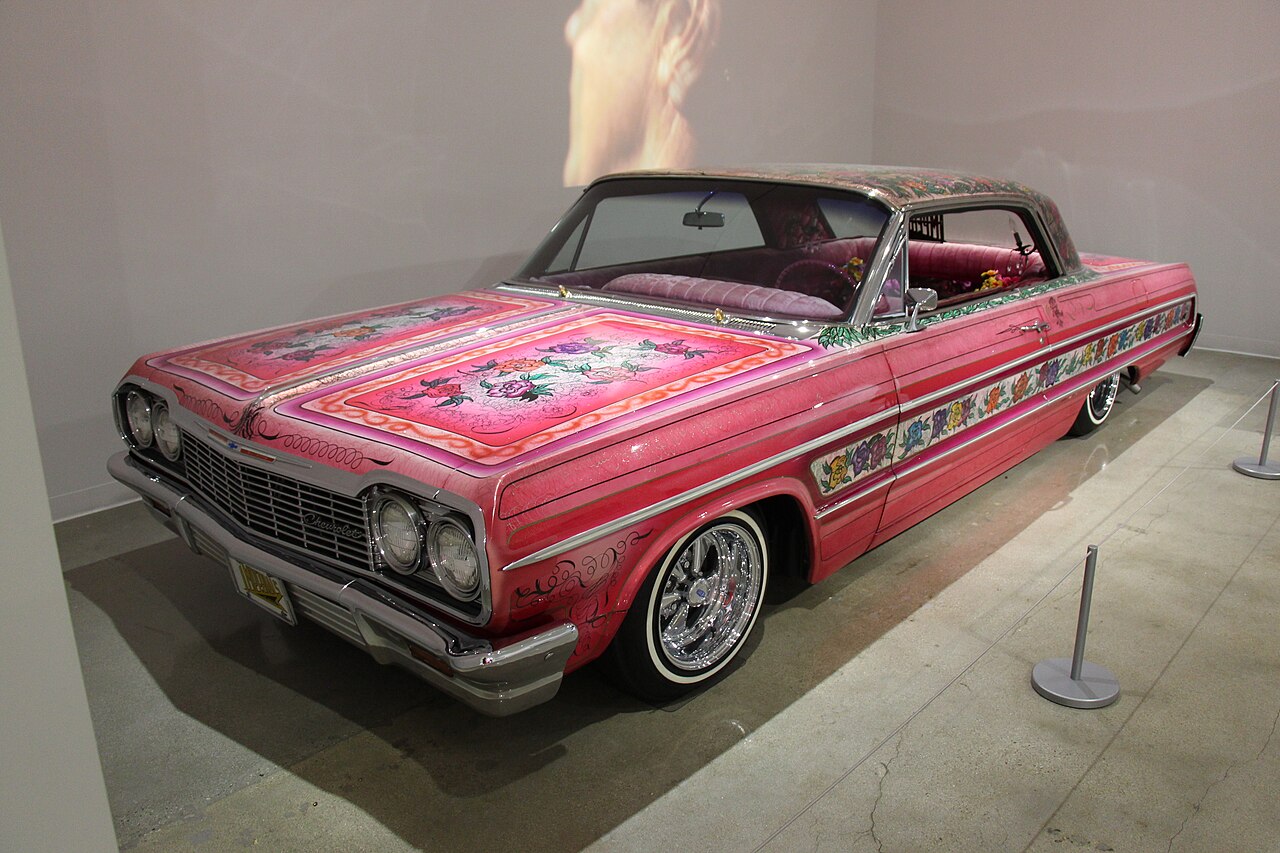
The '64 wasn't just a canvas — it was a community. Lowrider clubs organized car shows, neighborhood cruises, and mutual aid networks. See how that tradition lives on in our Impala build gallery. Driving a '64 was a declaration of culture, a connection to heritage, a refusal to be invisible. When Los Angeles tried to ban low-and-slow cruising on Van Nuys Boulevard in 1979, the protest wasn't just about cars. It was about who was allowed to exist in public space. The Impala, always a democratic car, had become a civil rights symbol.
Hydraulics: When Impalas Danced
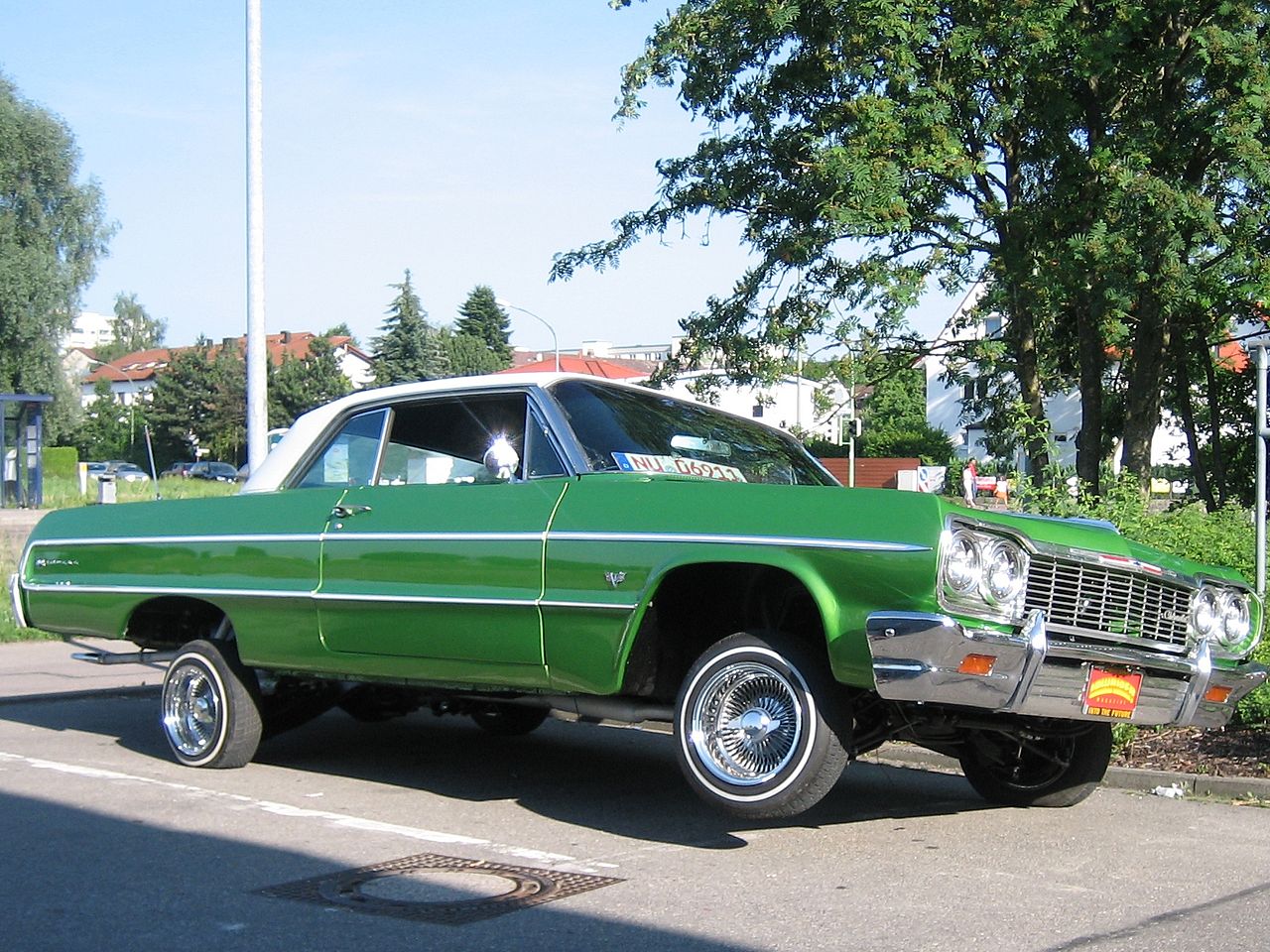
Hydraulic systems transformed the Impala from a beautiful static object into a kinetic art form. Pumps, cylinders, and accumulators wired to the chassis gave drivers the ability to raise and lower individual corners independently, to bounce the nose, to "hop" the entire vehicle. At its most extreme, competitive hydraulics events see Impalas launching their front ends four, five, even six feet in the air, held together by the skill of the builder and the strength of a reinforced unibody.
The '64 became the preferred platform because of its body rigidity, its wide aftermarket ecosystem, and frankly, because it looked incredible doing it. A perfectly slammed '64 on wire wheels, rocking front to back at a car show while a crowd gathers on a Los Angeles afternoon — that image is as definitively American as anything Norman Rockwell ever painted. It just doesn't get into the museums as often.
Hip-Hop's First Car
When West Coast hip-hop exploded in the late 1980s and early '90s, the Impala was already there. It was already the car of the neighborhood, already the machine in every driveway and every dream. What rap did was give it a national platform — and then a global one.
The references are endless and iconic. Dr. Dre put an Impala in the cover art for The Chronic. 2Pac referenced riding in Impalas across multiple records. Ice Cube has name-checked the Impala so many times it's essentially his automotive signature. The 1995 film Friday features an Impala as a recurring prop. By 2012, Kendrick Lamar's "A.D.H.D." opens with one. The car was everywhere in the music because it was everywhere in the actual lived experience the music was describing.
"Riding in my '64 Impala — one hand on the wheel, left elbow out the window. The whole world knowing that's my car."
A composite of dozens of West Coast hip-hop references that built an enduring mythologyThis was never product placement. It was organic, authentic documentation. The Impala was the car — aspirational and attainable at the same time, the perfect hip-hop object: something that could be transformed through labor, creativity, and pride into something genuinely beautiful. Something that announced you had made it, on your own terms.
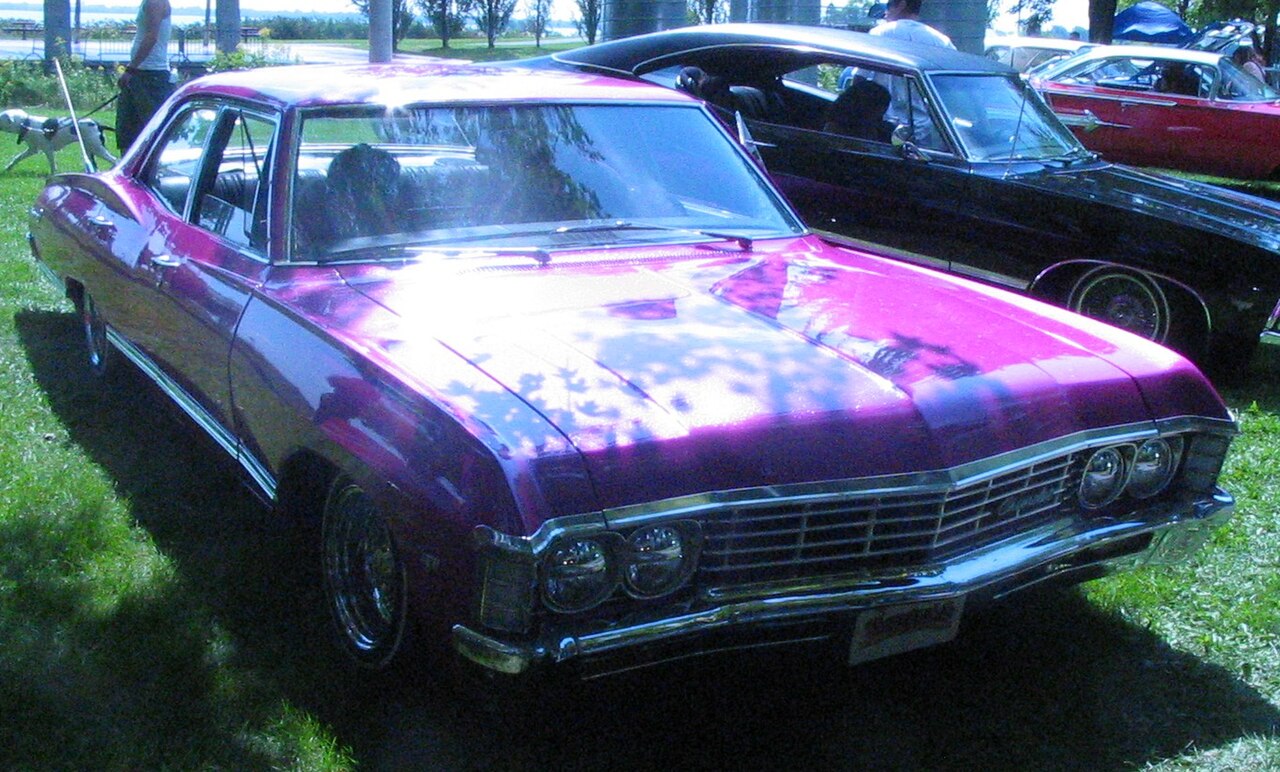
Baby: The 1967 That Hunted Monsters
On September 13, 2005, the CW network aired the pilot episode of Supernatural. In the opening minutes, a 1967 Chevrolet Impala Sport Sedan rolled across the screen, black as a funeral night, carrying two brothers and the weight of every ghost story ever told. Over the next fifteen years and 327 episodes, that car — nicknamed Baby — would become one of the most beloved fictional vehicles in television history.
Creator Eric Kripke has explained that the Impala was chosen deliberately. It needed to feel both powerful and lived-in, a home on wheels for characters who had no other home. The '67 Sport Sedan — not the sportier SS — was perfect: big enough for the boys to sleep in, classic enough to feel timeless, intimidating enough to be believable in a fight. The trunk, famously packed with weapons, became its own recurring character.
Season 5, Episode 22 features an entire monologue delivered to the Impala — describing how the car accumulated the memory of the Winchesters' lives. Army men jammed in the ashtray. Initials carved in the backseat. The weight of everything that had happened between those doors. It's one of the most unusual pieces of automotive writing in entertainment history, and it landed because it was true. Cars really do accumulate the stories of the people who drive them. Everyone who has ever loved a car understood exactly what was being said.
2020: Farewell to a Legend
In February 2020, General Motors announced it was discontinuing the Chevrolet Impala. The final cars rolled off the Oshawa, Ontario assembly line on February 27, 2020, after 62 model years. The reason given was the industry-wide shift toward SUVs and crossovers — the same forces that killed the Ford Fusion, the Toyota Avalon, and dozens of other sedans that once defined their segments.
The enthusiast response was immediate and emotional. Websites ran retrospectives. Social media filled with owners photographing their own Impalas. Car clubs organized tribute cruises from coast to coast. None of it surprised anyone who understood what the nameplate actually meant.
The final tenth-generation Impala was a fine car — front-wheel drive, well-equipped, available with a turbocharged four-cylinder or a smooth V6. But it had drifted far from its roots. It was no longer low. It was no longer a statement. It was a comfortable family sedan in a market that had decided it no longer wanted comfortable family sedans. In some ways, the Impala's death was a murder mystery with the American consumer holding the weapon.
The Legacy That Cannot Be Discontinued
Here is what General Motors cannot discontinue: the hundreds of thousands of first-generation Impalas still rolling through lowrider shows from East LA to Chicago. The '67s that rumble through neighborhoods on warm evenings, their big blocks idling with a sound that resembles a heartbeat more than a machine. The hip-hop catalog that keeps the mythology alive for every generation that discovers it. The Supernatural reruns that introduce Baby to audiences who weren't alive when it premiered.
The Impala existed at the intersection of affordability and aspiration for long enough that it became genuinely multi-generational. A grandfather who bought a 1965 Impala SS new. His son who built a '64 hydraulics car in the 1980s. His daughter who grew up watching Dean Winchester drive Baby across dark American highways. Three generations, one car. That is extraordinarily rare. It might be unique.
There are rumors — periodic and persistent — that Chevrolet may revive the Impala nameplate on an electric platform. Whether that happens or not, the original is already safe. The '64 will never not be the '64. Baby will never not be Baby. The SS 409 will always be the car the Beach Boys sang about. These things are permanent now, written into American culture in a way that no production decision can undo.
The Chevrolet Impala didn't just define American car culture. It is American car culture — the democratic promise of it, the artistry possible within it, the way a machine built for the masses can become, in the right hands, an individual masterpiece. That story doesn't end when the production line goes quiet. It ends when the last one rusts to nothing, and that day is a very long way off.