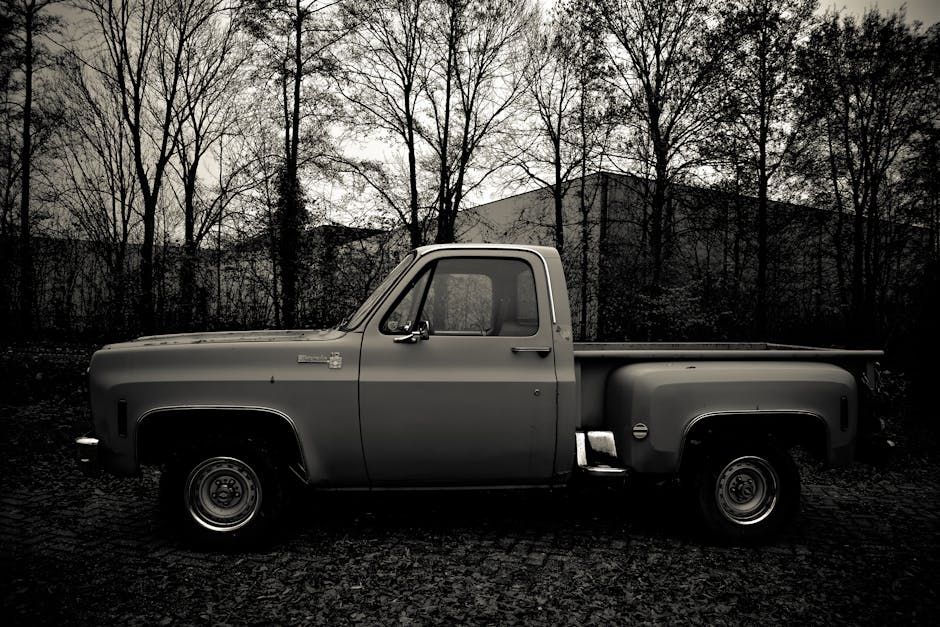
If you've spent more than five minutes on any Silverado forum, you've seen this debate. Somebody's asking whether the 6.2 is worth the price bump. Half the replies say absolutely yes, the other half say they've driven their 5.3 for 150,000 miles without a complaint. The truth, as always, is somewhere in the middle — and it depends entirely on what you're doing with the truck.
Here's the honest breakdown, without the forum noise.
Meet the Engines: L84 vs L87
Both are part of GM's Gen V small-block V8 family — the same lineage that's powered Chevys since the mid-century. They share a lot of DNA. But they are not the same engine.
The 5.3L L84 is available across the widest trim range — Work Truck (WT), Custom, LT, and LTZ. If you're buying a base or mid-trim Silverado, the 5.3 is what you're getting. It's not a consolation prize. 355 horsepower and 383 lb-ft of torque is a real engine.
The 6.2L L87 is reserved for the upper trims: RST, LTZ (with the optional package), High Country, and ZR2. It's a displacement upgrade — more bore, same stroke — and it shows in the numbers. 420 horsepower and 460 lb-ft of torque puts this engine in a different conversation.
The Power Gap: 65 HP / 77 LB-FT
On paper, 65 horsepower and 77 lb-ft of torque sounds like a big deal. And it is — on a track or under load. For daily driving around town, running errands, highway commuting? You will rarely feel that gap.
Both engines are smooth, quiet, and more than adequate for ordinary driving. The 6.2 delivers that extra shove when you mash it — merging onto the highway, passing on a two-lane road, hauling a trailer up a grade. In those moments, the difference is real and satisfying. But it's not night-and-day if you're just getting to work and back.
Back-to-back test drive both if you can. The 6.2's extra torque is most noticeable at partial throttle in the mid-range — exactly where you spend most of your driving time. That's where it earns the premium for a lot of buyers.
Towing: Where the 6.2 Earns Its Keep
This is where the conversation gets serious. The 5.3L tops out at approximately 11,500 lbs max tow rating (configuration dependent). The 6.2L bumps that to approximately 13,300 lbs. That's a nearly 1,800-lb difference.
For context: a loaded car hauler trailer, a large horse trailer, a bigger fifth-wheel, or a dual-axle boat rig can easily push past 11,000 lbs. If your tow load consistently sits in that 10,000–13,000 lb range, the 6.2 is not optional — it's the right tool.
If you're towing a small camper, a utility trailer, or a boat under 8,000 lbs, the 5.3 will handle it comfortably and you'll never miss the displacement.

Fuel Economy: Closer Than You Think
The EPA numbers: 5.3L at 17 city / 24 highway, 6.2L at 16 city / 22 highway. The 6.2 gives up about 1 mpg in both directions.
Real-world math: if you drive 15,000 miles/year at a 50/50 city/highway split, you're averaging roughly 20 mpg on the 5.3 and 19 mpg on the 6.2. At $3.50/gallon, the difference works out to roughly $300–$500 per year.
That's real money, but it's not enormous. And both engines use Dynamic Fuel Management (DFM) or Active Fuel Management (AFM) to deactivate cylinders at light loads, which narrows the real-world gap further than the EPA numbers suggest.
Both engines require 87 octane minimum, but the 6.2L responds noticeably to 93 octane premium — better throttle response and a slight bump in output. If you're buying the 6.2, budget for premium fuel on highway runs when it matters.
AFM/DFM Reliability: The Elephant in the Room
Here's where a lot of buyers get tripped up. Both the 5.3L and 6.2L use cylinder deactivation technology. The 5.3L uses Active Fuel Management (AFM), and the 6.2L uses the newer Dynamic Fuel Management (DFM) system. And yes — both have had documented lifter failure issues.
The AFM lifters on the 5.3L have been the more widely discussed problem, particularly on earlier Gen V engines. GM updated the hardware multiple times, and the current 5.3L in production trucks is better than it was in 2014. The 6.2L's DFM system is newer tech, and some owners report fewer issues — but it's not immune.
The fix most performance-focused owners choose: an AFM/DFM disabler. Devices like the Range Technology AFM Disabler or DiabloSport/HP Tuners tune-based disables keep all eight cylinders active and remove the wear pattern that causes early lifter failure. If you're keeping the truck long-term, this is a $50–$300 insurance policy worth considering for either engine.
Lifter failures happen, but they're far from universal. Plenty of 5.3L owners are past 200,000 miles with original lifters. Regular oil changes with the correct weight GM-spec oil, avoiding short trip cold starts when possible, and keeping up with maintenance goes a long way.
Cost Difference: Do the Math First
The 6.2L is not a standalone option on most trims — it's tied to higher trims and option packages. When you factor in the trim level required to access the engine, the real-world premium over a comparable 5.3L truck is typically $3,000 to $5,000.
On a new truck, that's a real number. On a used truck, it can mean a significant difference in sticker price between an otherwise comparable LT (5.3) and LTZ (6.2). Shop carefully — the gap varies by market, model year, and configuration.
Resale Value: The 6.2 Pays You Back
This is the argument that tips a lot of buyers toward the 6.2L — and it's a valid one. 6.2L Silverados consistently hold $2,000 to $4,000 more in resale value compared to equivalent 5.3L trucks at the same mileage and trim. The market recognizes the engine.
If you finance the truck and plan to sell in 3–5 years, the resale advantage significantly offsets — sometimes fully offsets — the original premium you paid. Run the depreciation math for your specific situation. The 6.2 often makes more financial sense than the sticker price suggests.
Mod Potential: Both Are LS-Family Gold
The Gen V small-block shares a lot of its aftermarket DNA with the legendary LS platform. The parts ecosystem is enormous, the tuning community is deep, and both engines respond well to modifications.
5.3L Build Path
The 5.3 is the budget builder's engine. Cold air intake, long-tube headers, a cam swap, and a tune can push a 5.3 well past 400 horsepower at the crank. Parts are cheaper, there are more forum threads on every possible mod combo, and the lower base price leaves budget for the build.
6.2L Build Path
The 6.2L starts with more displacement and a better factory rotating assembly. Bolt-ons alone — intake, exhaust, tune — net bigger gains on a 6.2 than on a 5.3. If you're aiming for a street truck that's fast out of the box and gets serious with bolt-ons before touching internals, the 6.2 is the better foundation.

Side-by-Side: Full Spec Comparison
| Category | 5.3L L84 | 6.2L L87 | Winner |
|---|---|---|---|
| Horsepower | 355 hp | 420 hp | 6.2L |
| Torque | 383 lb-ft | 460 lb-ft | 6.2L |
| City / Hwy MPG | 17 / 24 | 16 / 22 | 5.3L |
| Max Tow Rating | ~11,500 lbs | ~13,300 lbs | 6.2L |
| Fuel Mgmt System | AFM | DFM (newer) | 6.2L |
| Lifter Risk | Present | Present (lower) | 6.2L |
| Trim Availability | WT through LTZ | RST, LTZ+, HC, ZR2 | 5.3L |
| Price Premium | Base | +$3K–$5K | 5.3L |
| Resale Value | Standard | +$2K–$4K | 6.2L |
| Annual Fuel Cost Diff. | Saves ~$400/yr | Costs ~$400/yr more | 5.3L |
| Bolt-On Response | Good | Excellent | 6.2L |
| Budget Build Cost | Lower | Higher | 5.3L |
The Verdict
The honest answer is that the right engine depends entirely on what you're doing with the truck and what you can spend. Neither is wrong. But they serve different buyers.
- Budget is the primary constraint
- Daily driver with light to moderate towing
- You want more available trims
- Building a performance motor from scratch
- Buying used and the price gap is significant
- You tow heavy — above 10,000 lbs regularly
- Performance matters, not just utility
- Planning to sell in 3–5 years (resale math works)
- Want the best bolt-on foundation
- Long-term ownership — the premium spreads out
"The 6.2 pays for itself in resale. If you can swing it, get it."
The forum debates will never end, and that's fine. Both engines are good. The 5.3L has proven itself over hundreds of thousands of trucks and millions of miles. The 6.2L is a step up in every performance metric that matters — and it holds its value better on the backend. If your budget allows it and you're keeping the truck for years, spend the money. If you're watching every dollar or you're buying a base-trim work truck, the 5.3 will not let you down.
What it won't do: apologize for itself. Neither will you, either way.